
Wappinger Previous Residents by Era
Previous residents of one Wappinger address appear through a sequence of sources, not one master database. Begin with the county parcel record and present roll so the exact parcel and municipality are clear. Then move through dated tax rolls and recorded instruments. The historical household layer uses the 1940/41 telephone-book film, documented Grinnell newspaper runs, federal census material through 1950, and probate or vital routes when a trail reaches a death or estate event. The date and source type tell a reader what a record can prove.
| Address-history source | Time span | Wappinger access route | What it can establish |
|---|---|---|---|
| ParcelAccess assessment record | Current snapshot, refreshed around May 1 and July 1 | Dutchess County GIS | Parcel, owner, mailing and situs distinction, sale pointer. |
| Current tax rolls | 2023–2026 listed at inspection | Dutchess County tax-roll page | Dated town or village roll and current parcel text. |
| Historic tax rolls | 1952–2019 | Dutchess County tax-roll page | Owner, address, and assessment continuity by roll. |
| Recorded deed images | July 7, 1907–present in posted ranges | Dutchess County Clerk Document Search | Transfer sequence, named parties, recording data, and legal description. |
| Older Clerk books and indexes | Before the online 1907 deed-image range | County Clerk Record Room and historical-search help | Earlier grantor-grantee and book-page research. |
| Town historical material | Town records from 1875 onward | Historical Town Board Minutes and Town Clerk | Road, public-work, project, or civic chronology. |
| Town genealogy route | Local records from 1882 | Wappinger Town Clerk/Registrar | Qualifying birth, death, and marriage research, subject to access rules. |
| Telephone-book film | 1940/41 | New York State Library | Subscriber and address-era clue. |
| Grinnell newspapers | Listed local intervals from 1910 through 2011 | Grinnell Public Library microfilm | Notices, obituaries, and dated local context. |
| Federal census | 1790–1950 currently open | National Archives and established genealogy repositories | Household snapshot at census dates, not an annual address list. |
| Dutchess probate material | Wills 1751–1903; index 1790–1905; packets about 1793–1868 | FamilySearch catalog and Surrogate routes | Estate, heir, and relationship endpoints. |
Choose the first source by era. A recent transfer calls for the parcel card and Clerk index; a mid-century name may call for tax rolls, the telephone book, and a newspaper; a nineteenth-century lead can require Clerk books, Fishkill geography, probate, and local history. Do not treat a source’s start year as proof that the address itself began then.
Finding Wappinger Previous Residents by Parcel
Start a Wappinger address search in Dutchess County ParcelAccess. Its address mode separates number, street components, and municipality, and the town filter should be set to Town of Wappinger when that is the intended jurisdiction. The property card can supply the parcel number, parcel location, municipality, owner name, Primary Owner Mailing Address, last sale date and price, deed book or page, and other assessment fields. Those details form a bridge to a recorded document, not a same-day report of who occupies the address.
Parcel location is the physical property. Primary Owner Mailing Address is the correspondence address recorded for the tax roll. The county says displayed ownership is tied to the March 1 taxable-status date, and assessment information is refreshed around May 1 and July 1. For a later transfer, consult the current roll, local assessor or Real Property office, or the County Clerk index. This separation is a Wappinger-specific quirk that keeps an owner line from being overstated as a current resident claim. A Wappinger previous residents search should carry that date distinction through each source.
Address trail: street address → ParcelAccess parcel and municipality → property-card sale reference → Clerk party/date search → recorded instrument → earlier party and legal description.
Note: A mailing address or ownership field is a dated property lead, not proof that a named person lived at the parcel.
Wappinger Deed Chain for Prior Owners
The Dutchess County Clerk’s Document Search is party, date, and document oriented rather than a street-address search. Use the parcel card’s owner name, last sale date, municipality, legal-description clues, or book and page to begin. The search accepts last-name-first entries, allows partial names, ignores spaces, capitalization, and apostrophes, and can join as many as three name criteria. A separate Historical Search mode and the Clerk’s help material support work across its posted record ranges.
- Open the current parcel card and record the parcel number, exact municipality, last sale date, deed reference, and legal-description clues.
- Search the present owner as a party in a focused date range, then confirm the document type, municipality, recorded date, document number, and book or page.
- Read the document image and identify the grantor, or seller, plus the legal description, filed-map reference, and any cited prior instrument.
- Search that seller’s acquisition as grantee, or buyer, and compare the legal description, lot, subdivision, and referenced book or page.
- Repeat only where the parcel identity remains consistent; estates, renamed parties, corporate transfers, and subdivisions can interrupt a simple name sequence.
- Grantor
- The party transferring an interest in a recorded instrument, commonly the seller in a deed.
- Grantee
- The party receiving that interest, commonly the buyer named in the deed.
- Chain of title
- The documented sequence of recorded transfers for the same property interest. It requires matching legal-description evidence, not just a repeated surname.
- Legal description
- The lot, map, metes-and-bounds, or other formal property description that can remain useful when an older document omits a modern street address.
Wappinger Records Before Online Deeds
Dutchess County Clerk describes county land-record custody and legal filings reaching back to 1715, yet the verified online deed-image range begins July 7, 1907. That comparison is crucial for past residents research. A missing online image is not evidence that an older deed never existed. Once a chain reaches the online boundary, shift to the County Clerk Record Room, historical books or indexes, and relevant State Archives, FamilySearch, or DCHS material. The research did not verify a precise pre-1907 counter procedure, so a direct Record Room inquiry is the honest fallback.
The County Clerk makes document images viewable online without charge; no-watermark downloads or prints cost $0.50 per page. Its published fee schedule also lists a $10 record-room mailed copy per document, $11 for a certified mailed copy, and a $5 name search for each two years searched. Those fees can make a focused date, parcel, or grantor-grantee clue more useful before a copy request is made.
The Dutchess County Clerk fee schedule is the source for the documented copy and name-search options.
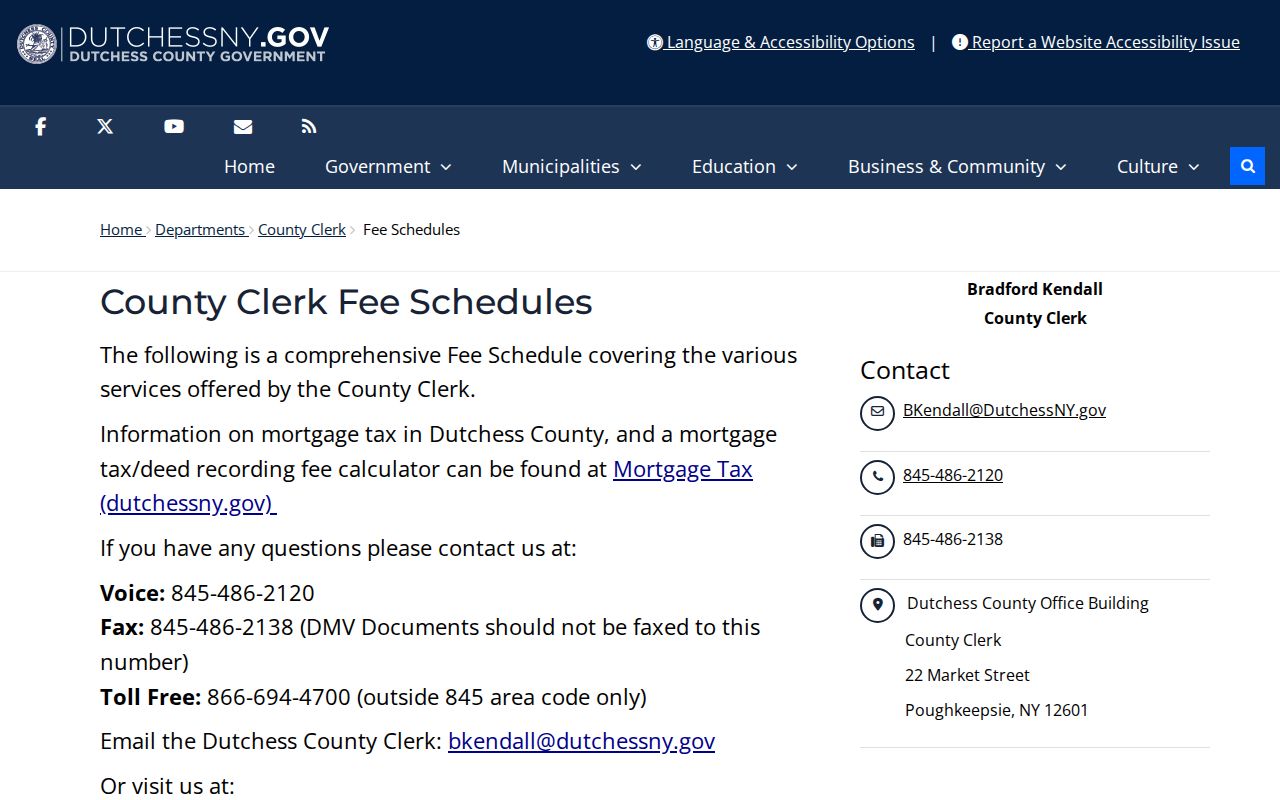
Use the fee schedule after identifying the likely document, rather than assuming that every historical record can be obtained or copied in the same way.
Wappinger Tax Rolls and Past Addresses
Dutchess County publishes historical municipal tax rolls for 1952 through 2019, while its inspected current page lists town, county, village, and school material for 2023 through 2026. The current list expressly includes a Town of Wappinger and Village of Wappingers Falls roll. Pick the correct municipality first, and for a school or village document identify that additional geography. The county directs researchers to use a PDF search to locate a parcel, but the roll date must remain part of every note.
Tax rolls can place an owner, address, and assessment context in a dated sequence. They do not automatically identify each past resident or resolve a transfer made after the roll’s status date. Compare a change in the roll with the Clerk’s recorded instrument, then use newspaper, telephone-book, census, or probate evidence for the household layer. This yearly comparison is often more reliable than guessing from a modern address alone.
Wappingers Falls Telephone Clues
The New York State Library’s verified Wappingers Falls telephone-book film for 1940/41 offers a narrow subscriber-era check. Grinnell’s Local History Collection provides the next layer: Chronicle, Herald, Post, Shopper, and Southern Dutchess News microfilm in their documented runs. For the exact collections, availability, and evidence limits, use the Wappinger city directory collections reference before treating a printed listing as a household record.
Grinnell Library’s history page supplies context for the local institution that preserves Wappinger-area history material. Its Local History Collection is in-library use, and Special Collections require an appointment. A researcher can use a telephone-book page to select a narrow period, then check the nearest documented newspaper run for an obituary, notice of a move, street mention, or estate reference. A local notice is evidence to corroborate, not a replacement for a deed, tax roll, court file, or vital record.
The Grinnell Library history source is the manifest lead-in for this Wappinger past residents image.
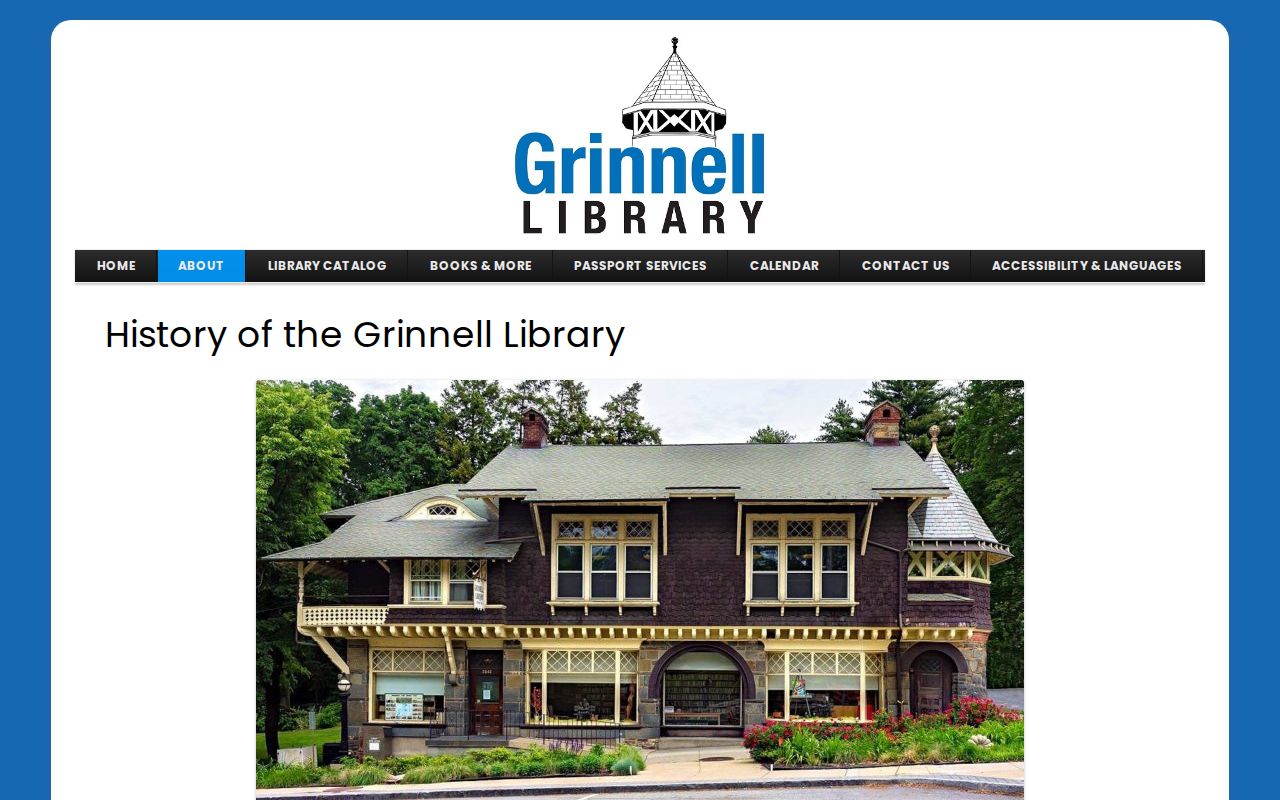
Its in-library materials make a dated, local newspaper check possible where an online property index stops short.
Wappinger Addresses Before 1875
Town of Wappinger was erected from the Town of Fishkill on May 20, 1875. Records before that date can therefore be described or filed under Fishkill, even when they concern the same physical area. Wappingers Falls adds a second jurisdiction issue: the village incorporated in 1871 and crosses Town of Wappinger and Town of Poughkeepsie. A Wappingers Falls postal or newspaper label does not decide which municipality, parcel, or custodian controls the underlying record.
The Town’s Office of the Town Historian distinguishes contextual historical help from the Town Clerk’s official vital-record role. Use the Historian, library, or historical society for a place, road, or local-history question, then use the Clerk or Department of Health for an official vital route. Chelsea may also be found as Low Point, Carthage Landing, or Chelsea-on-the-Hudson, while Hughsonville and other hamlet names can appear in historical materials.
The Wappinger Town Historian page documents the contextual local-history route.
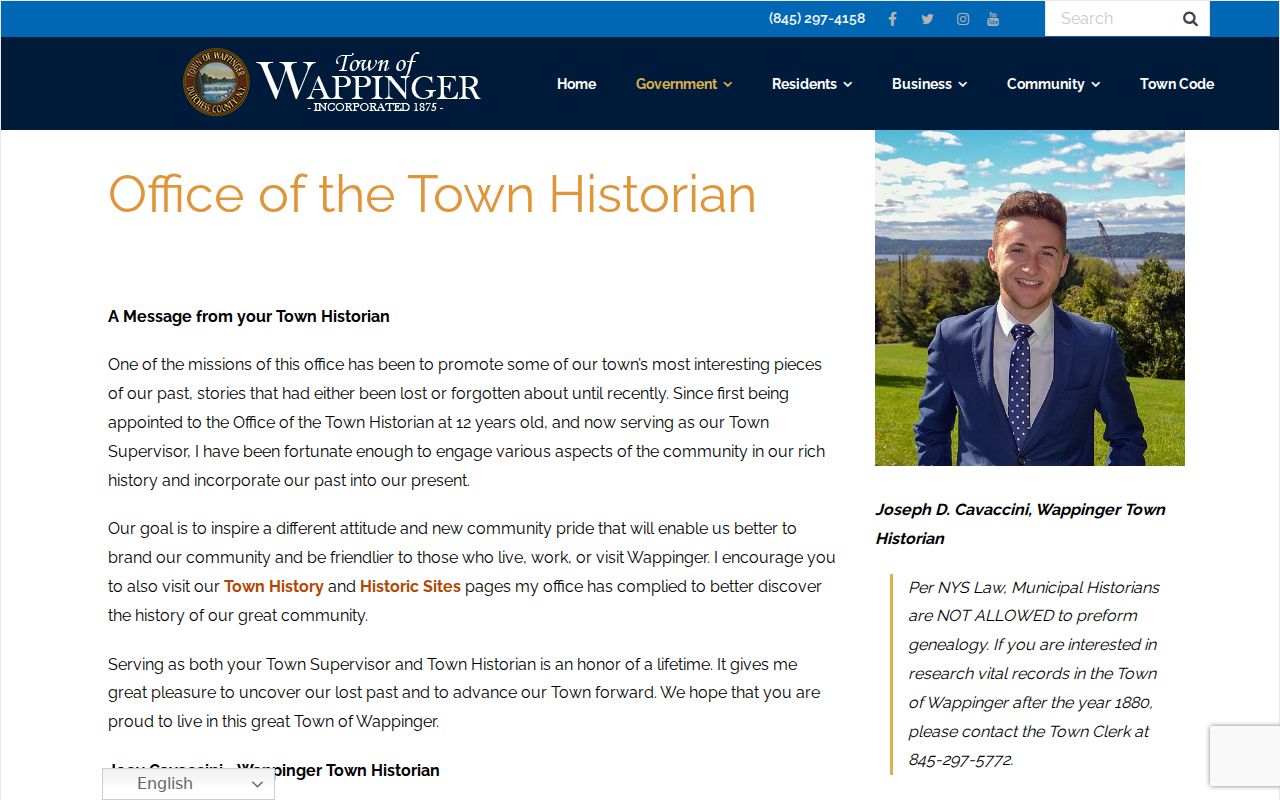
Place-name context can widen a search, but a parcel municipality and the original custodian should decide the final record path.
Town historical minutes provide another local channel for roads, public works, named projects, and civic action after the town’s creation. They can explain why an address appears in town material, but they do not replace a title record or a household source.
The Historical Town Board Minutes archive is the official source for this dated municipal context.
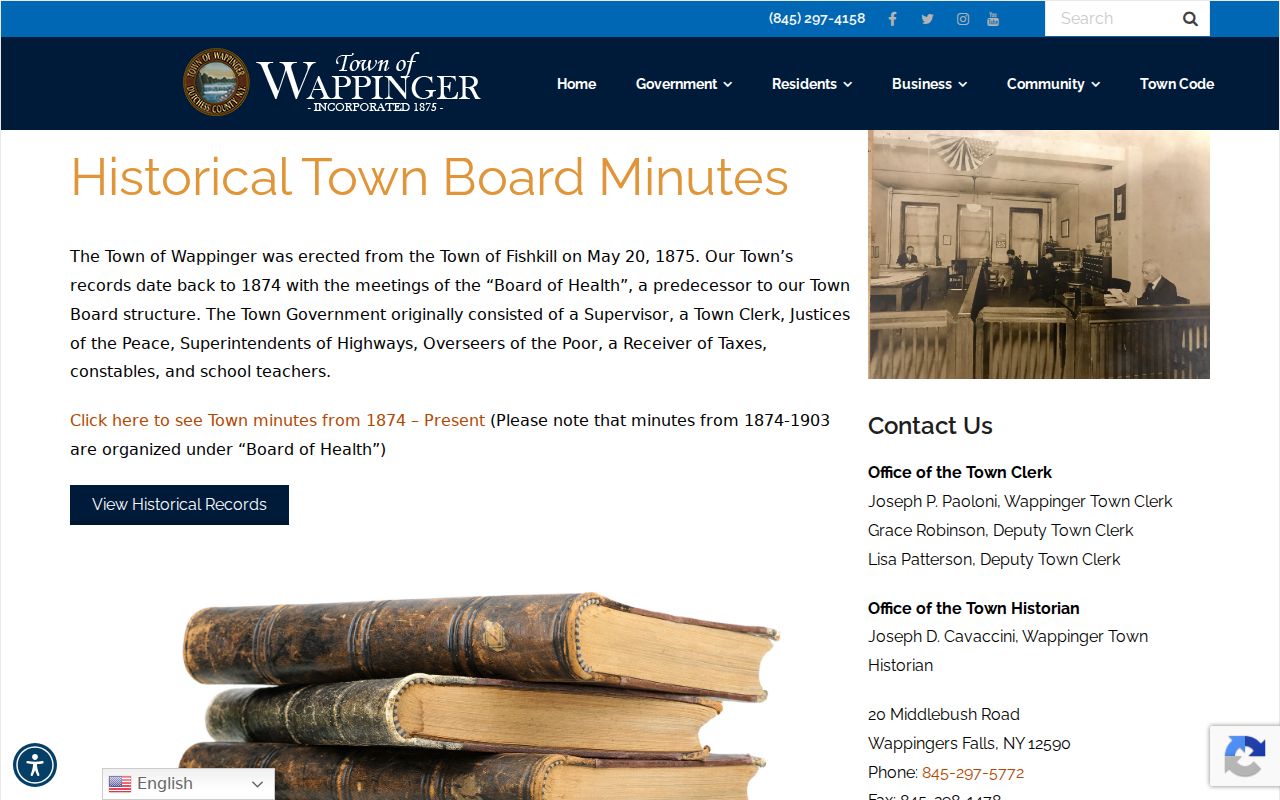
Record the meeting date and document title, then join a minutes reference to the appropriate deed, roll, or other primary record.
Wappinger Previous Residents in Household Records
Ownership and occupancy are separate questions. A deed chain identifies recorded parties and property transfers. Telephone-book film may identify a subscriber. The federal census can supply a household snapshot at its own date. Local newspapers can add a dated event or address reference. Put those pieces in time order before concluding that someone lived at a particular Wappinger address. A surname’s disappearance can mean a move, a death, an unlisted year, or a change in the place name being searched.
- Start with the exact title and year of a telephone book, newspaper, tax roll, or census record.
- Copy the person’s spelling, locality, address, and page or image reference exactly.
- Pair the closest local newspaper date with a tax-roll or recorded-transfer date, rather than filling a gap with an assumed annual listing.
- Use the census only for its released census date and confirm whether it names Wappinger, Wappingers Falls, a hamlet, or an earlier Fishkill geography.
- Close the sequence with probate, cemetery, obituary, or qualifying vital evidence when the dated record trail reaches an estate or death event.
Lawful personal research. Use old-address material for family history, property history, or personal curiosity. Do not use any record to stalk, harass, or harm another person.
Wappinger Previous Residents at Trail Endpoints
When a recorded chain reaches an estate, Dutchess Surrogate’s Court and historical probate material can provide the next lead. The research identifies Dutchess wills from 1751 through 1903, an index from 1790 through 1905, and estate packets from about 1793 through 1868 through the FamilySearch catalog and court routes. Cemetery places named by the Town, local obituaries, and Grinnell microfilm can help narrow a death or estate period. They should be paired with the relevant court or vital record rather than treated as a final legal conclusion.
The FamilySearch Wappingers-area catalog entry is an archival route for historical material, but access restrictions can apply. The New York State Archives name-index gateway and DCHS catalog are useful when an early address or family lead needs a series or call number. For local events known to have been filed in Wappinger, the Town Clerk/Registrar says genealogy research reaches back to 1882; statewide genealogy copies and certified copies follow different eligibility rules.
The FamilySearch catalog source provides the manifest image for this archival Wappinger address-history route.
Preserve the collection title, date span, and access condition before using an archival catalog entry to extend a past-residents trail.